
Best Core and Pelvic Floor Exercises for Postpartum
Dec 27, 2025Core and pelvic floor exercises are one of the most important pieces of postpartum recovery, yet they are also some of the most misunderstood. After birth, many people are told to do kegels, brace their abs, or they jump back into intense abdominal exercises. For most postpartum bodies, that advice can backfire.
Your pelvic floor is not just one muscle. It is a group of muscles at the base of the pelvis that helps support your pelvic organs, helps with bladder control and bowel control, plays a role in sexual function, and works with your deep abdominal muscles to create core stability. When these muscles are tight, weak, or poorly coordinated, symptoms like urine leakage, pelvic pain, pelvic organ prolapse, and lower back pain can show up.
The goal of postpartum core and pelvic floor exercises is not to grip harder. It is to restore coordination, strength, and pressure management so your body can function well again.
This post may contain affiliate links.
Understanding the Core and Pelvic Floor as a System
Your pelvic floor sits inside the pelvic region, attaching near the pubic bone and tailbone. It forms the base of your abdominal cavity and helps support your internal organs. Above it sits the diaphragm. Around it are the deep core muscles, including the transverse abdominis (the "corset muscle"), connective tissues, back muscles, and deeper core muscles that provide pelvic stability.
This system plays a vital role and a crucial role in postpartum recovery. When pressure inside the abdominal cavity is not managed well, it often shows up as stress incontinence, pelvic floor dysfunction, or unresolved pelvic floor disorders.
A strong core does not mean visible six-pack muscles. True overall core strength comes from training the right muscles with proper technique and breath.
Why Kegels Alone Are Not Enough
Kegel exercises can be helpful for some people, but they are often overprescribed and poorly taught. Many postpartum moms already have a tight pelvic floor, and continually doing kegels can make their pelvic floor even tighter and make pelvic floor problems even worse. Tight muscles cannot generate strength well and often contribute to urinary incontinence, sexual dysfunction, and pelvic pain.
For best results, pelvic floor training must include both contraction and relaxation, coordinated with breathing. This is where smarter core and pelvic floor exercises come in.
Start With Breath: Ribcage and Pelvic Floor Breathing
Diaphragmatic breathing is the foundation of pelvic health. It helps regulate pressure, improves body awareness, and teaches the pelvic muscles when to relax and when to engage.
Ribcage breathing with a strap
Wrap a yoga strap or resistance band around your ribcage. Inhale and feel the ribs expand into the strap. Exhale and feel the ribs gently draw back in. This teaches proper rib movement and supports the pelvic floor without gripping.
Pelvic floor breathing
On an inhale, allow the pelvic floor to soften and descend slightly. On an exhale, gently lift the pelvic floor while engaging the transverse abdominus. This is not about just stopping a stream of urine (though if you're totally lost, that can be a good place to start). It is about coordinated muscle activation with breath.
This breathing pattern supports bladder control, sexual health, and pelvic floor strength.
Core and Pelvic Floor Exercises on Hands and Knees
Hands and knees is a great starting position because it reduces pressure on the pelvic organs.
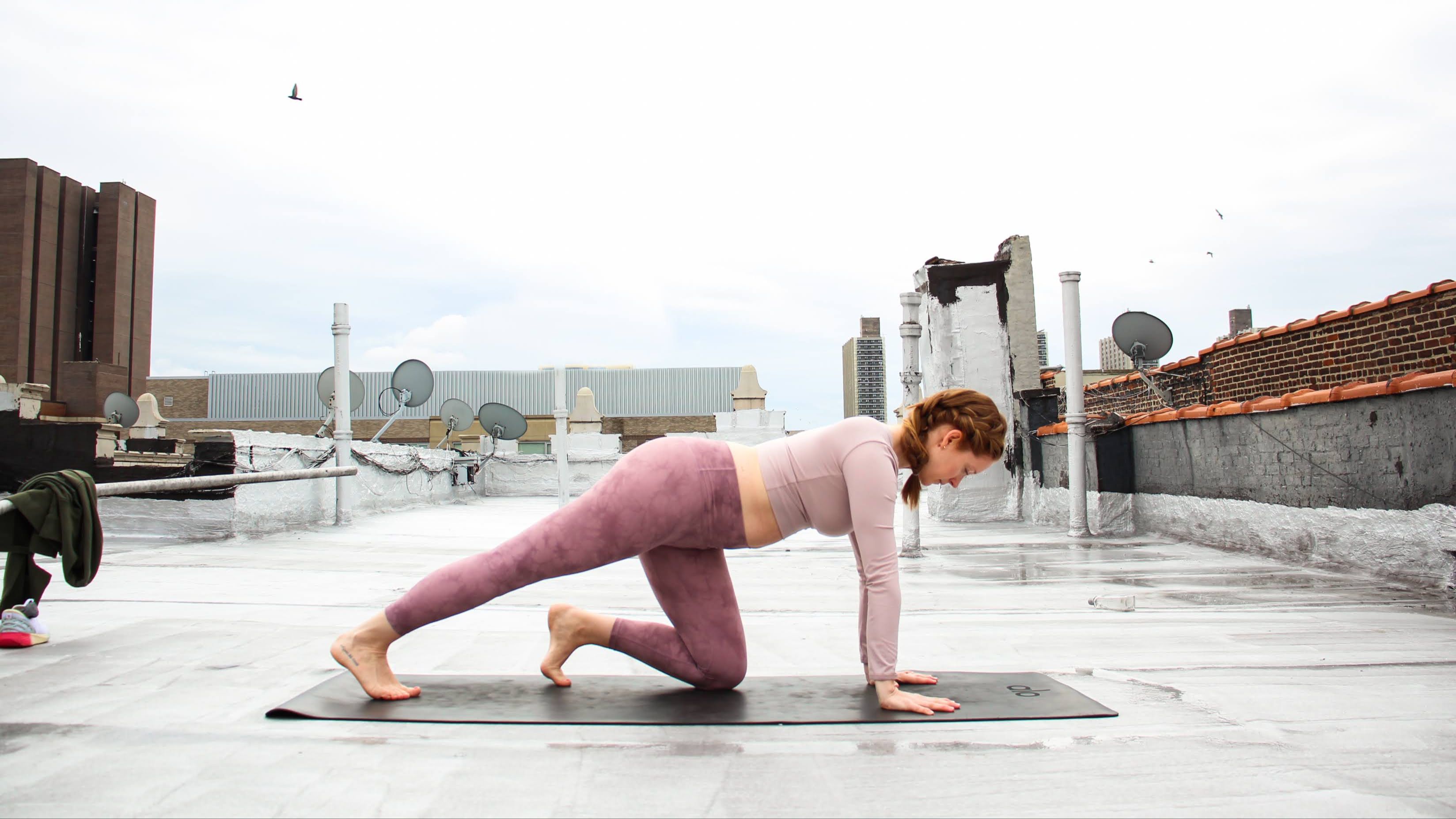
Magnetized hands and knees
Set up with hands under shoulders and knees under hips. Press hands and knees into the floor. Gently pull your hands toward your knees and knees toward your hands without moving them as you exhale. This activates deep abdominal muscles and pelvic muscles without strain.
Focus on good posture, neutral spine, and slow breathing. This is a great way to build core stability early postpartum.
Bird dogs
From hands and knees, extend one arm and the opposite leg while maintaining a straight line through the spine. Avoid arching the lower back. Exhale as you lift. This exercise strengthens deeper core muscles, back muscles, and pelvic stability.
Supine Core and Pelvic Floor Exercises
Lying on your back (supine) allows you to focus on proper form without excessive load.
Pelvic tilts
Lie on your back with feet shoulder-width apart. Inhale to prepare. Exhale and gently tilt the pelvis, thinking of drawing the pubic bone toward your sternum. This builds awareness of pelvic positioning and deep core muscles.
Supine one-foot lift
From the same position, lift one foot an inch off the floor while exhaling and maintaining core stability. Keep neck and shoulder blades relaxed. This trains muscle groups that support daily movement and postpartum recovery.
Strength-Building Exercises That Respect the Pelvic Floor
As strength improves, load becomes important.
Bridge pose
With feet hip-width apart, exhale and lift hips while engaging glutes and pelvic muscles. Avoid flaring ribs. Bridges strengthen the lower body, pelvic floor muscles, and deep abdominal muscles. Inhale as you lower and relax.
Side plank
Side plank builds lateral core strength and pelvic stability. Start on knees if needed. Focus on proper technique and breath rather than duration.
Avoid hollow body hold or high-impact exercise early postpartum. These can increase the risk of pelvic floor problems if introduced too soon.
Pelvic Floor Release and Relaxation Techniques
Strength without release often leads to tight pelvic floor symptoms.
Happy baby pose
This stretch encourages pelvic floor relaxation and supports sexual function and bowel control. I also love malasana and pigeon pose for pelvic floor relaxation.
Foam rolling
Using a foam roller or trigger point ball on glutes, inner thighs, and outer hips can reduce tension that contributes to a tight pelvic floor.
You can find recommended tools on this list. I especially love foam rollers (especially small ones for the mid-back!), balloons, and trigger point balls for pelvic floor release work.
Release work is a good idea even if you feel weak. Tight muscles often mask weakness.
How to Build a Sustainable Exercise Program
For best results, consistency matters more than intensity. Start with sets of 10-15 repetitions where appropriate, move with control, and prioritize proper form.
A well-designed exercise program improves pelvic floor health, core stability, sexual health, and reduces side effects like urine leakage and pelvic pain.
If you have ongoing symptoms like pelvic organ prolapse, stress incontinence, or pain after prostate surgery or childbirth, working with a physical therapist or pelvic health physical therapy provider is a great way to get personalized guidance. Always consider medical advice from a qualified healthcare provider.
Support Beyond This Post
If you want step-by-step guidance, my Core Power program walks you through progressive core and pelvic floor exercises that respect postpartum bodies.
For a deeper understanding of anatomy, breathing, and pressure management, download my free guide, How to Fix Your Pelvic Floor.
If you already know your pelvic floor is tight, a great place to start is my Relax Your Pelvic Floor guide.
If you are pregnant or planning another birth, pelvic floor release work before labor matters too. Preparing for Birth includes techniques that support pelvic floor relaxation and better outcomes.
get more like this
straight to your inbox, every Monday morning!
