
What Even the Best Online Childbirth Classes Miss
Jul 25, 2026Though the best online childbirth classes will teach you the stages of labor, walk you through comfort measures, and hand you a solid birth plan template, there's still a HUGE gap almost none of them cover. It's the one most first-time moms wish someone had warned them about.
Let's back up for a sec. If you're pregnant and researching online classes, you've probably already found a dozen "best online childbirth classes" roundups. And to be fair, a lot of them deserve the hype. Good childbirth educators (many of them a registered nurse, certified nurse midwife, or certified childbirth educator) pack these courses with in-depth information on the stages of childbirth, medical interventions, and what to expect on delivery day. That's genuinely valuable. So no, this isn't a takedown of childbirth education classes. It's a "here's what I'd add because no one else is talking about it" post.
What the Best Online Childbirth Classes Actually Cover
Most best online birthing classes —whether they're hospital classes, independent prenatal classes, or a hypnobirthing-style program— hit the same core topics:
- The birth process, from early labor to active labor to pushing
- Labor positions and movement
- Pain relief options, from relaxation techniques to medical comfort measures
- What to put in your birth plan
- The role of your support person, support team, or birth doulas
- Basics of newborn care once you baby home
These classes offer genuinely so much valuable information. But information about the birth process isn't the same as preparation for the birth process. That distinction is the whole point of this post.
I remember taking a childbirth ed course when I was pregnant with my first. I had read a lot of books and done a good amount of research by then and honestly there wasn't much covered in the class that I hadn't already learned. And they certainly didn't mention the pelvic floor and its role in pushing. I wish I had known then what I know now!
The Gap Nobody Talks About: Your Pelvic Floor
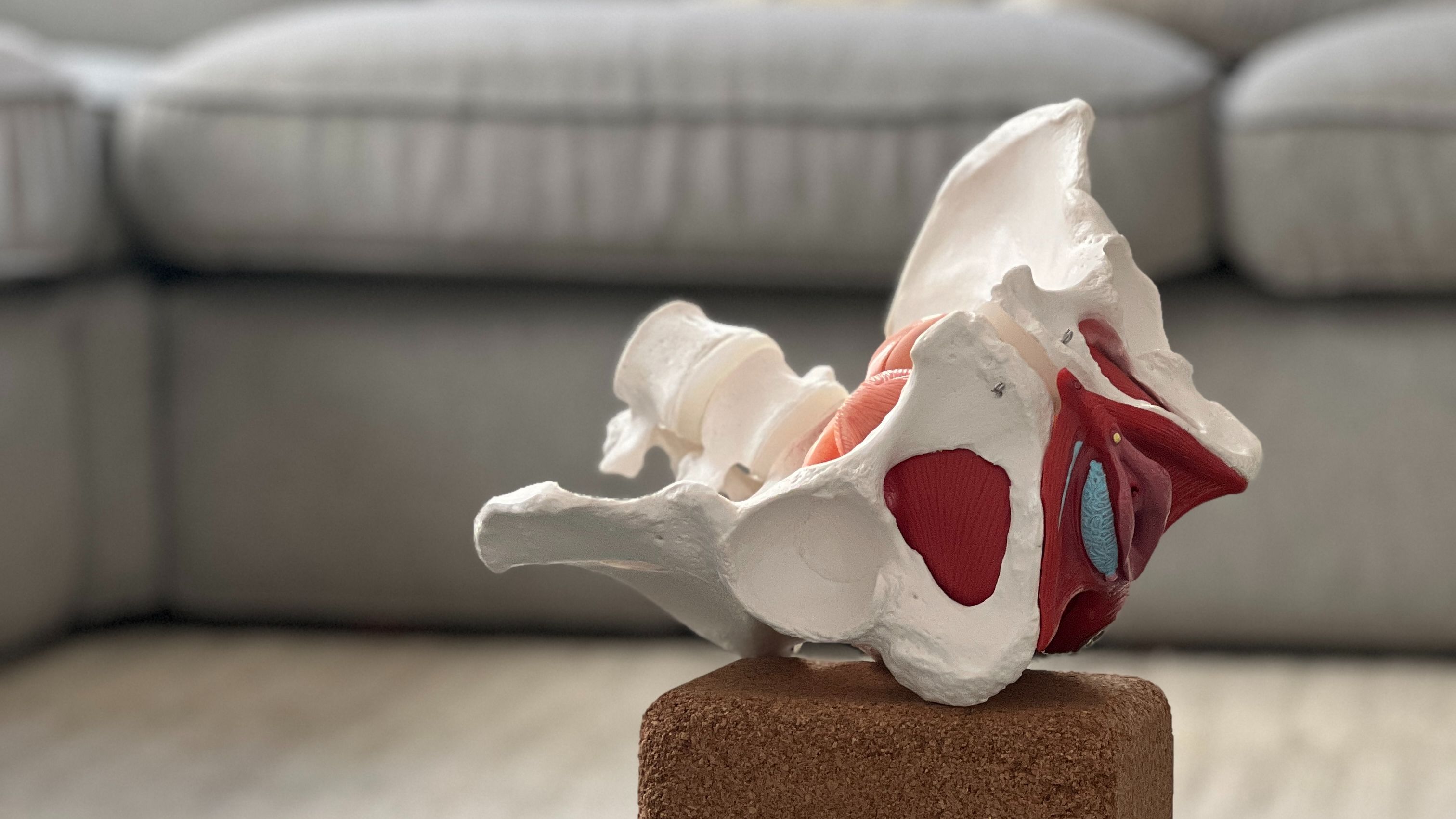
Here's what I mean: most online childbirth classes are built by birth professionals who specialize in labor and delivery, not by anyone trained in pelvic health. So the curriculum tends to stop at "here's how to breathe" without ever explaining why your breathing techniques matter for your pelvic floor specifically.
Deep, full breaths during labor aren't just a relaxation technique. Research shows they actually help mobilize and oxygenate your pelvic floor and abdominal muscles (read this article for more on this!).
When it comes to pushing, there's actually no meaningful difference in pushing time, birth injury, or prolapse risk between open-glottis (breathing while pushing) and closed-glottis (holding your breath) methods (research linked here). In other words: whatever feels right for you and your body is probably fine. Most classes don't tell you that. They just tell you to "breathe."
There's also a jaw-and-throat connection to the pelvic floor that almost never makes it into a slide deck. Making noise during labor (actual noise, moaning, even mooing like a cow!) can help your pelvic floor release instead of clench.
If nobody's walked you through this yet, my free pelvic floor guide breaks down that connection in plain language, without any over-our-heads medical jargon.
PSA: Comfort Measures Only Work If Your Body Already Knows How to Release
A lot of the best online childbirth classes teach comfort measures (labor positions, movement, counter-pressure) as though your pelvic floor will automatically cooperate once you're in the "right" position. It won't, necessarily. Not if you've spent your whole pregnancy (or your whole life, honestly) unconsciously gripping instead of releasing.
Research backs up something a lot of classes gloss over: upright positions (squatting, kneeling, sitting on a birth stool) outperform lying flat on your back, partly because they open your pelvic outlet and let gravity help your baby descend (read more on that here). But practicing those positions during pregnancy is different from practicing intentional pelvic floor release. One is about where your body is. The other is about what your pelvic floor is doing while it's there.
What Most First-Time Parents Wish They'd Known
Talk to enough new parents, especially first-time parents, and a pattern shows up. They took the class. They read the books. They followed expert advice from a nurse practitioner or lactation consultant on postpartum recovery, newborn care, and everything in between. And they still felt caught off guard by how much their experience of labor hinged on something nobody mentioned: whether their pelvic floor could actually let go.
This isn't a knock on the classes. It's just not their job. A course built to prep you for vaginal birth, unmedicated birth, or natural hospital births in general can't also be a personalized pelvic floor program. There's only so much information one course can hold before it stops being useful.
Building a Birth Prep Plan That Covers Every Stage of Labor
So what actually fills the gap? A few things, regardless of whether you're aiming for a natural labor, a vaginal birth with pain relief, or you're not sure yet and want to stay flexible. Here's what I recommend as a prenatal yoga teacher, pelvic floor expert, and mom who's been through this myself 3 times already:
- Take the online class. It's still worth it for the in-depth information on the birth process, medical interventions, and what your healthcare provider will likely walk you through at the birth center or hospital.
- Add pelvic floor–specific prep. Most childbirth educators aren't trained in this, and that's normal and perfectly fine. It just means you need a second resource.
- Loop in your support people early. Whether that's a partner, a doula, or both — talk through your birth plan and your specific needs before delivery day, not during it.
- Don't wait for the third trimester. Pelvic floor prep works best started early — definitely before your due date is even close, and ideally before your first trimester ends if you can manage it.
Good News: You Don't Have to Choose Between the Class and the Missing Piece
The good news is this isn't an either/or. You don't have to ditch your online childbirth classes and start over. You just need to pair them with something built specifically around your pelvic floor — something that gives you practical tools, not just information.
That's exactly the gap my Birth-Ready Pelvic Floor masterclass is built to close. It's not another overview of the stages of labor. It's not going to go over your birth options, medical interventions, or what to pack in your hospital bag.
It's the piece that helps your body actually apply everything the rest of your prep taught you, so you're not just informed on delivery day, you're prepared.
It's the thing that'll take you from countless kegels, hoping something's working, to actually getting your pelvic floor ready for birth.
And if you're not ready to commit to a full class yet, start with my free pelvic floor guide. It's a solid first step toward understanding what your best online childbirth classes left out, at instant access and zero cost.
Why Pelvic Floor Birth Prep Matters
If your pelvic floor can't fully relax, your baby has to push through resistance on the way out. That can contribute to longer labors, more tearing, and a harder recovery. Stress, being on high alert, a ramped-up nervous system: these are all things that can make your pelvic floor tense up. A tight pelvic floor can mean a body that resists the progress of labor. If your body is already showing these signs, it's telling you something that matters for your birth — right now, while there's still time to do something about it.
You can't control your birth. But you can influence it. And you have more power to do that than anyone has told you.
Most moms walk into birth hoping for the best. The ones who walk in feeling ready understood something the others didn't: that birth isn't just something that happens to you. It's something you can actively prepare for. And your pelvic floor is a big part of that. Understanding how your pelvic floor works — what it actually does during labor, what gets in its way, and how to work with it instead of against it — can be the thing that makes you an active participant in your own birth story. Not a passive bystander. Not someone things happen to. You deserve to walk in prepared. That starts here.
Tap here to grab my Birth-Ready Pelvic Floor masterclass and actually get your pelvic floor ready for birth.
The Bottom Line
The best online childbirth classes — even the genuinely excellent ones, even the ones led by a registered nurse or certified nurse midwife with decades of experience — aren't designed to teach pelvic floor release. That's not a flaw in the class. It's just outside its scope.
Your birth experience, your postpartum recovery, and honestly your early days with your newest addition all go smoother when your pelvic floor is part of the plan — not an afterthought you discover mid-active labor. So take the class. Build your birth plan. Assemble your support team. And then close the one gap almost no course covers.
get more like this
straight to your inbox, every Monday morning!
